
Help Your Customers Leap Into Something New This Year!
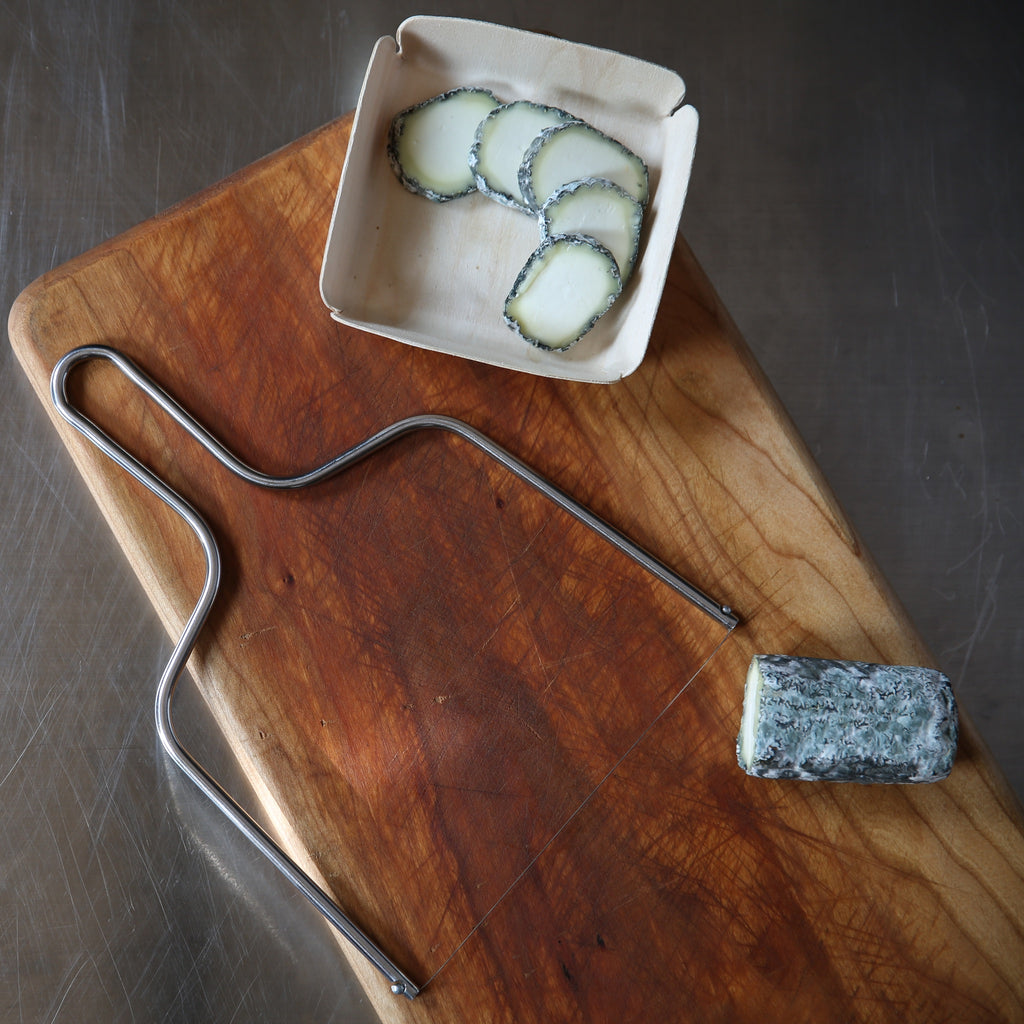
This year is a Leap Year, meaning there is one extra day in February to sell cheese! If your customers are stuck in the same routine, week after week, buying the same quarter pound of the same cheese, it's time to help them Leap into something new for 2024.
Cheesemongers are the customers' tour guide through the cheese case! We've put together a list of some popular cheeses that could potentially be a gateway for your customer to try something similar that can help expand their palate and horizons.
If they like Humboldt Fog, offer them a taste of ash-ripened chèvre like Valençay, Selles-sur-Cher, or Blakesville Creamery Linedeline.
If they like Midnight Moon, have them taste Brabander or OG Ghoast.
If they like Manchego, suggest Ossau Iraty, Pecorino Sardo, Zamorano, or a raw milk farmhouse Manchego.
If they like Delice de Bourgogne, recommend Brillat-Savarin, St. Stephen, or Nettle Meadow Kunik.
If they like fresh chèvre, try offering an aged goat cheese like Bucheron, Leonora, or Blakesville Creamery Lake Effect.
If they like block cheddar, suggest a raw milk block cheddar like Shelburne Farms Cheddar, or even a clothbound cheddar like Montgomery's Cheddar or Cabot Clothbound.
If they like Gruyère, suggest Pleasant Ridge Reserve, Comté, or Beaufort.
If they like Jarlsberg, have them taste the original Swiss cheese - authentic Emmentaler AOP.
If they like Beemster, offer a sample of L'Amuse Gouda, Jake's Aged Gouda, or OG Kristal.
If they like Stilton, offer Stichelton, Shropshire Blue, or Bayley Hazen Blue.
If they like Roquefort, try Fourme d'Ambert or Valdeon.
If they like Piave, suggest Sbrinz, KM 39, or Montasio.
Once you've successfully led your customer to their new favorite cheese, don't forget that you are still their cheese educator! Teach them how to properly care for their cheese that they spent so much time and effort selecting. Formaticum One-Ply paper is perfect for most styles of cheese and will keep it healthy in your customer's fridge so that the flavor stays as fresh as the day they tasted it in the shop. You can also recommend that they purchase a package of Formaticum Reusable Cheese Bags so that they always have professional cheese storage at their fingertips in the future.
The Rennet Question
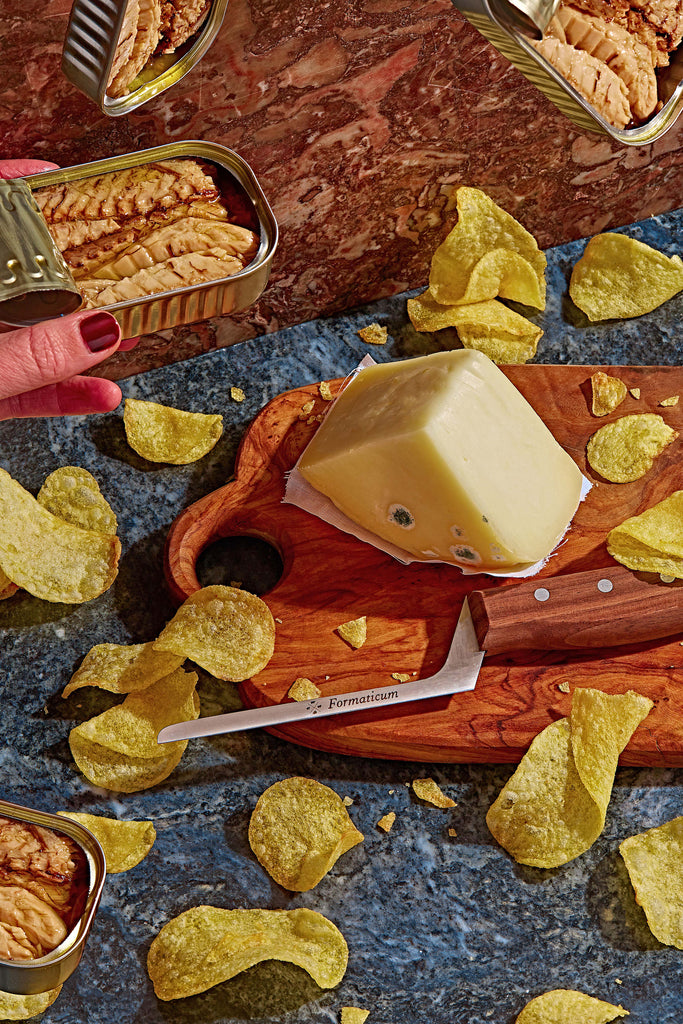
With the internet's recent discovery that real Parmigiano Reggiano is made with rennet and is therefore not suitable for vegetarians, cheesemongers everywhere are now fielding questions from customers in search of vegetarian-friendly cheese. Aside from reminding them of the classic nursery rhyme about Little Miss Muffett eating her curds and whey, here are some ways to streamline your rennet-based sales interactions.
First, it's helpful to dispel any internet-derived rumors about rennet by explaining the basics to your customer. For anyone who needs a refresher: coagulation is the first step of cheesemaking, separating the solids (curds) from the liquid (whey) so that the solids can be manipulated in different ways, eventually resulting in cheese. Some cheeses are lactic- or acid-coagulated, meaning that the action is caused by lactic acid bacteria present in the milk. But many cheeses, including most hard or aged cheeses, are made with rennet. Rennet-coagulated cheeses use animal (or "traditional"), microbial, or vegetable-based rennet.
Traditional rennet is derived from the 4th stomach, or abomasum, of a young ruminant animal. Vegetable-based rennet can be derived from plant-based sources like thistle, and microbial rennet is grown in a lab using live organisms like mold, yeast, or fungi.
Each version has benefits - while traditional rennet is better for longer-aged cheeses, microbial rennet is suitable for vegetarians, and is also cheaper to produce, which decreases the cost of cheesemaking. Thistle rennet is more common in torta-style cheeses from Spain and Portugal, and lends an herbaceous flavor to the cheese. Some cheesemakers use combinations of different types of rennet to achieve their desired texture and flavor.
It's also helpful to have a list on hand that contains all the vegetarian-friendly cheeses available in your case. It's easy to reference a list when a customer inquires, instead of frantically Googling different cheeses or having to check every sign in the case. You can add to the list as time goes on for a more comprehensive reference for the mongers working the counter.
You can also add this bit of information to your case signs along with the standard information about producer, milk type, and heat treatment. For more information about custom cheese case signs, email wholesale@formaticum.com.
Of course, there is no sales technique more effective than sampling. The USA produces the highest number of vegetarian rennet cheeses in the world, second only to Portugal, so these cheeses are usually a safe bet. You might even introduce your customer to their new favorite cheese!
Once you've cut your customer's cheese, be sure to wrap it in Formaticum professional cheese paper to preserve the flavor and keep it healthy in the fridge.
New Product: Custom Cheese Case Signs
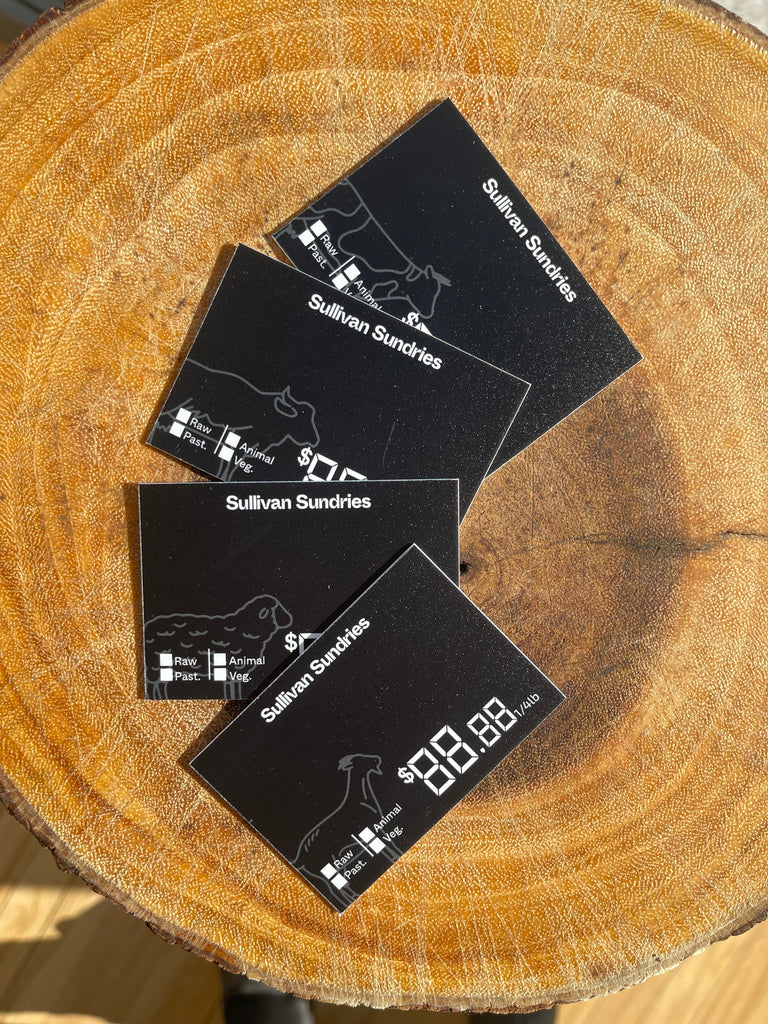
We all know how important signs are when it comes to navigating a cheese case - customers can feel overwhelmed at a large counter, adrift in a sea of cheese they may have never even heard of before. Cheese signs help demystify the intimidating wall of curd and put your customers more at ease. A familiar country flag, a few tasting notes, or even a funny joke in a brief description may catch a customer's eye and encourage them to interact with their monger instead of heading straight for the grab and go case.
But cheese signs can be time consuming, expensive, and labor intensive - cheese prices fluctuate, not everyone has great hand writing, and if you're lucky enough to have a graphic designer on hand, chances are they won't be thrilled about the prospect of laminating and meticulously cutting hundreds of cheese signs that will likely need to be printed again in the next few months with a new price anyway. And where do those pesky sign holders keep disappearing to?!
If these problems sound all too familiar, we would like to present you with a solution in the form of our newest program: Custom Cheese Case Signs! Let us handle the signs so that you can focus on handling the cheese. Customize your signs with any information you want - producer, country flag of origin, heat treatment, rennet type…the options are limitless. You can choose from a variety of design templates, or create your own, and even use your own font! Start with blank signs for each milk type, or use your core cheeses and holiday favorites - the signs are completely customizable for your needs.
These signs are made of sturdy plastic, about the thickness of a credit card, that won't be affected by high humidity like laminated paper signs. You can also use a black marker to conveniently and easily change the price of the cheese whenever necessary. We also offer sleek and sturdy sign holders that firmly hold the sign upright without rusting or poking into the cheese itself.
For more information about our custom sign program, email wholesale@formaticum.com!
Honor the Cheesemakers (& Importers, & Distributors & Mongers…), Save Your Cheese with Formaticum
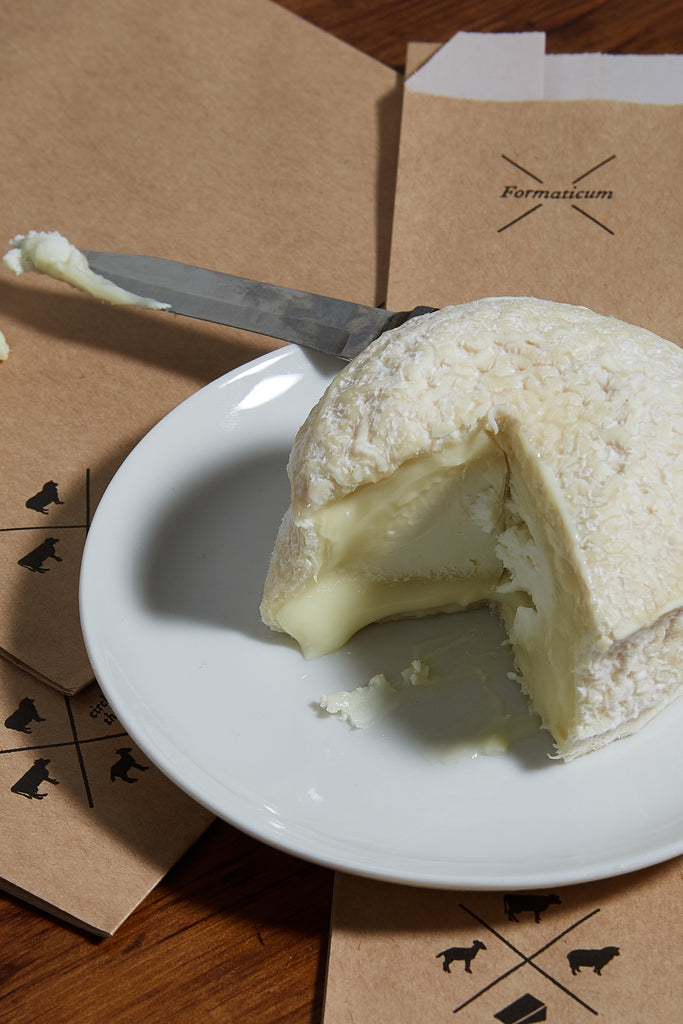
Every cheesemonger will at some point encounter a customer who is frustrated with the price of cheese. This rite of monger passage is all too common these days, with the price of cheese (and quite frankly, everything else) having increased significantly over the past few years. But how can we connect with our customers to help them understand that with cheese, as with most other things, you do indeed get what you pay for? As we know all too well, good cheese usually isn't cheap, but the sticker shock is also directly connected to consumers' removal from the food system as a result of big box grocery stores and industrialization. In order to reconnect our customers with our cheese, and foster an appreciation for these products, we must first help our customers understand just how much work, passion, and knowledge is required to produce a wheel of real cheese and get it into their hands.
It would take days to describe every detail of how a wheel of cheese gets from the maker to the counter, but what's important to focus on is the number of hands that (literally and metaphorically) touch the cheese on it's journey to the shop. It's also important to remember that energy and utilities, higher quality ingredients, equipment, packaging, and feed for the animals, for example, are expensive. There is no substitute for human skill and intuition when it comes to making and aging cheese, and employing humans instead of robots is expensive. We rightfully celebrate the farmer and the cheesemaker and the affineur, but we should also consider the people who clean the vats, and mop the floors, and wrap the cheeses, just to name a few. Additionally, the longer the cheese is aged, the fewer wheels of cheese can be produced, meaning each wheel will be more expensive but taste better than a cheese that was aged at an accelerated rate to make room for more cheese in the caves for faster cash. Longer, more deliberate aging also represents a significant cash flow issue for cheesemakers and affineurs, since they do not get paid until the cheese is sold - and this labor of love is often a skill handed down through generations in family businesses! So the price tag does not only represent the cheese itself, but the sometimes hundreds of years of technique and tradition that is present within that wheel.
Once the cheese is ready for sale, it needs to be packed up and moved from the aging facility to its next destination, which might be a port where the cheese will loaded onto a container by hand to be shipped overseas. Aside from the cost of transport to the port and ocean freight, importing cheese has costs associated with customs paperwork and FDA involvement, among other things. Additionally, transport costs, which are already high, can often change with little or no notice. The cheese then spends 6 or more weeks in a temperature-controlled shipping container traveling to its next destination, where it will be unloaded by more human beings and cleared by the FDA. Since cheese is a living product, it must be meticulously packed up and maintained during transit so that it will arrive in good condition. Soft cheeses are often more expensive to transport because they're more fragile and therefore require more complicated storage and transportation, and have a higher loss that needs to be built into the cost.
It's then picked up by distributors, who need to make a profit off of it, and who will transport that cheese to the stores that will cut and sell it by hand, also for a profit so that employees and bills can be paid and more cheese can be purchased. This is just the tip of the iceberg and does not even begin to cover the amount of labor and skill that is involved in every step of importing cheese. Helping your customers understand at least a small part of the process will help them start to appreciate how much work goes into getting them their quarter pound of aged Gouda or perfectly ripe Camembert. Getting cheese from the farmer to the consumer is an incredibly nuanced process that requires an incredible amount of skill and knowledge from many different people!
But if waxing poetic about cheesemaking traditions and shipping logistics isn't enough to convince them, the most effective way to create meaningful connections between your customers and their cheese is just to make sure it tastes as good as possible. And the best way to do that is to uphold the same standard of care that everyone else along the way has shown the cheese - using Formaticum knives and tools to properly cut the cheese is important, as well as storing and wrapping your cheese in Formaticum professional cheese paper. This will ensure that your cheese can breathe, maintains the perfect humidity levels, and most importantly, tastes great for your customers. Continuing a high standard of care at the counter is a great way to show respect for everyone else in the supply chain who worked so hard to get the cheese to your counter - and it gives you the chance to pass that passion along to your customer.

Formaticum News
Our home to share our cheese chronicles and more.
Categories
Recent Posts
Aged Chèvre & The Loire Valley: Diversity & Seasonality
FORMATICUM PRODUCT DROP: NEW Professional Cheese Knives & Tools
Formaticum Retail Product Disposal Guide
Upcoming Events
Connect with Us
Join the Newsletter
Sign up to receive special offers, new product releases, updates from the cheese shop, and more.